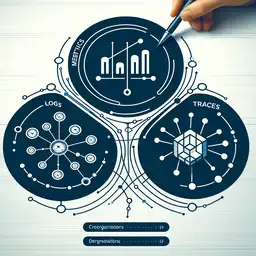
Combining Metrics, Logs, and Traces Effectively
In modern DevOps and SRE practices, combining metrics, logs, and traces effectively is essential for achieving true observability in distributed systems. This approach transforms raw data into actionable insights, enabling faster incident resolution, proactive issue detection, and optimized…

Combining Metrics, Logs, and Traces Effectively
In modern DevOps and SRE practices, combining metrics, logs, and traces effectively is essential for achieving true observability in distributed systems. This approach transforms raw data into actionable insights, enabling faster incident resolution, proactive issue detection, and optimized system performance[1][2][3].
Why Combining Metrics, Logs, and Traces Effectively Matters for DevOps and SREs
Metrics track performance trends over time, such as CPU usage or error rates, providing high-level alerts on system health[1][5]. Logs capture detailed, moment-specific events like errors or warnings, offering context for anomalies[2][5]. Traces map request flows across microservices, pinpointing latency bottlenecks or service interactions[1][6].
Alone, these signals are limited: metrics lack detail, logs are noisy without aggregation, and traces miss trends[3][6]. Combining metrics, logs, and traces effectively creates a unified narrative—metrics detect issues, traces isolate them, and logs explain why—reducing mean time to resolution (MTTR) by correlating data via shared identifiers like trace IDs[2][3].
For SREs, this integration supports service level objectives (SLOs) by linking business impact to technical signals, fostering accountability across teams[1]. Centralized platforms aggregate these pillars, eliminating silos and enabling end-to-end visibility[4].
The Three Pillars: Roles and Strengths
Metrics: High-Level Trends and Alerts
Use metrics for counting events, measuring durations, or reporting resource states like memory usage[5]. Tools like Prometheus and Grafana dashboards trigger alerts on spikes, such as error rates jumping from 0.1% to 5%[2].
Logs: Detailed Event Context
Logs excel at recording exceptions with stack traces or variable dumps[5]. Structured logging in JSON format makes them searchable and correlatable[2][4].
Traces: Request Flow Visibility
Traces visualize distributed request paths, correlating logs and metrics via unique IDs to reveal bottlenecks[2][6]. OpenTelemetry standardizes this for low-overhead instrumentation[1].
Practical Workflow: Combining Metrics, Logs, and Traces Effectively in Production Debugging
Consider a microservices e-commerce app where checkout fails intermittently. Here's an actionable workflow grounded in real-world practices[2]:
- Detect with Metrics: Grafana alerts on a checkout error rate spike. Query Prometheus for p99 latency trends.
- Isolate with Traces: Jump to Jaeger or Tempo, filtering by service. A trace reveals a slow payment gateway.
- Diagnose with Logs: Use trace ID to filter ELK Stack logs:
{"trace_id": "abc123", "error": "TimeoutError", "service": "payment-gateway"}[2]. - Resolve and Validate: Fix the gateway config, confirm metrics normalize, and review traces for sustained improvements[3].
This pivots seamlessly between signals, cutting guesswork[1].
Best Practices for Combining Metrics, Logs, and Traces Effectively
- Centralize Observability: Aggregate into one platform like Grafana or Middleware.io for correlation across envs[2][4].
- Propagate Context: Embed trace/span IDs in logs and metrics for seamless linking[2][3].
- Structure Data: Use JSON logs: easier parsing and dashboards[4]. Avoid sensitive data[2].
- Sample Strategically: Trace 1-5% of high-traffic requests to balance overhead[2].
- Instrument Consistently: Adopt OpenTelemetry for metrics, logs, traces (MLT) with auto-instrumentation[1].
- Integrate Toolchain: Link to CI/CD (Jenkins), alerts (PagerDuty), and Slack for automation[4].
Code Examples: Instrumenting with OpenTelemetry
Start with a Node.js service using OpenTelemetry to emit correlated signals[1]. Install via npm:
npm install @opentelemetry/api @opentelemetry/sdk-node @opentelemetry/exporter-trace-otlp-http @opentelemetry/auto-instrumentations-node
Basic tracer setup (tracer.js):
const opentelemetry = require('@opentelemetry/sdk-node');
const { getNodeAutoInstrumentations } = require('@opentelemetry/auto-instrumentations-node');
const { OTLPTraceExporter } = require('@opentelemetry/exporter-trace-otlp-http');

const sdk = new opentelemetry.NodeSDK({
  traceExporter: new OTLPTraceExporter({ url: 'http://localhost:4318/v1/traces' }),
  instrumentations: [getNodeAutoInstrumentations()],
});

sdk.start();
Custom metric and log with trace context (app.js):
const { trace } = require('@opentelemetry/api');
const { Counter } = require('@opentelemetry/api-metrics');

const meter = new MeterProvider().getMeter('checkout-service');
const errorsCounter = meter.createCounter('checkout.errors', { description: 'Checkout errors' });

app.post('/checkout', async (req, res) => {
  const tracer = trace.getTracer('checkout');
  const span = tracer.startSpan('process-checkout');

  try {
    // Simulate payment call
    await paymentGateway.process(req.body);
    span.end();
    res.json({ success: true });
  } catch (error) {
    span.recordException(error);
    span.setStatus({ code: SpanStatusCode.ERROR });
    errorsCounter.add(1, { error_type: error.message });
    console.log(JSON.stringify({
      level: 'error',
      message: error.message,
      trace_id: span.spanContext().traceId,
      service: 'checkout'
    }));
    res.status(500).json({ error: 'Checkout failed' });
  } finally {
    span.end();
  }
});
This ensures a latency spike in Grafana metrics links to traces in Jaeger and filtered logs in Loki, embodying combining metrics, logs, and traces effectively[1][3].
Overcoming Common Challenges
High-cardinality data overwhelms systems—slice metrics by dimensions (user, region) and use sampling[1]. Tracing adds latency; low-overhead libs like OpenTelemetry mitigate this[1][6]. For scale, filter noise with SLO-aligned alerts[3].
Post-incident, use correlated data for postmortems: metrics for trends, traces for paths, logs for details—validating fixes[3].
Aligning with Business Outcomes
Combining metrics, logs, and traces effectively ties tech to business: product tracks adoption, engineering links deploys to metrics, leadership sees ROI[1]. Domain-oriented observability measures incident impact on objectives, refining processes[1].
Teams at Coinbase use this for high-scale reliability, filtering millions of events[3].
Getting Started Today
Audit your stack: centralize data, instrument with OpenTelemetry, and build SLO dashboards. Test with the checkout workflow above. This shift from monitoring to observability empowers SREs to preempt fires, not just fight them[1].
(Word count: 1028)