Combining Metrics Logs and Traces Effectively
Combining metrics logs and traces effectively is essential for DevOps engineers and SREs to achieve full-stack observability, reduce mean time to resolution (MTTR), and debug production issues swiftly. [1][2][4] This approach unifies quantitative trends from metrics, detailed event…
Combining Metrics Logs and Traces Effectively
Combining metrics logs and traces effectively is essential for DevOps engineers and SREs to achieve full-stack observability, reduce mean time to resolution (MTTR), and debug production issues swiftly.[1][2][4] This approach unifies quantitative trends from metrics, detailed event records from logs, and request flow visualizations from traces into a single narrative for root cause analysis.[2][5]
Why Combining Metrics Logs and Traces Effectively Matters for DevOps and SREs
Traditional monitoring silos force teams to switch between tools, wasting time and leading to inaccurate diagnoses.[1] By combining metrics logs and traces effectively, you gain a 360° view: metrics detect anomalies like latency spikes, traces pinpoint bottlenecks in distributed systems, and logs provide contextual details like error payloads.[1][3][5]
Benefits include shorter MTTR, fewer escalations, and cost savings from unified storage.[4] Platforms like Datadog and OpenObserve demonstrate this by correlating data via shared tags (e.g., trace_id, service, env), enabling single-click workflows from alerts to logs.[1][4] For SREs, this supports SLOs, burn-rate alerts, and proactive scaling in Kubernetes or microservices environments.[1][4]
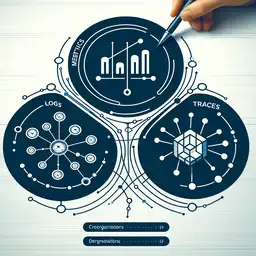
The Three Pillars: Metrics, Logs, and Traces
Each signal plays a distinct role, but their power emerges when combined.
- Metrics: Aggregate data like CPU usage, error rates, or request latency over time. Use them for alerting on thresholds (e.g., Prometheus queries in Grafana).[2][5]
- Logs: Structured or unstructured records of events, capturing errors, payloads, and timestamps. Enrich with trace context for relevance.[1][3]
- Traces: Distributed spans showing request paths across services, including entry/exit points, database calls, and latencies.[1][5]
Combining metrics logs and traces effectively means linking them via common identifiers, turning isolated data into actionable insights.[3]
Practical Strategies for Combining Metrics Logs and Traces Effectively
1. Standardize with OpenTelemetry Resource Attributes
OpenTelemetry (OTel) provides a vendor-neutral way to instrument applications, ensuring consistent resource attributes (key-value pairs like service.name, env) across signals.[3][4] This foundation enables seamless correlation in tools like Grafana or OpenObserve.
Actionable Step: Instrument your Go service to inject trace context into logs. Here's a code example adapting OTel best practices:
// logger.go - Custom handler to enrich logs with resource attributes and trace context
package main

import (
    "context"
    "log/slog"
    "os"

    "go.opentelemetry.io/otel/attribute"
    "go.opentelemetry.io/otel/sdk/resource"
    "go.opentelemetry.io/otel/trace"
)

func initLogger(res *resource.Resource) {
    attrs := res.Attributes()
    handler := slog.NewJSONHandler(os.Stdout, &slog.HandlerOptions{
        Level: slog.LevelInfo,
    })
    wrappedHandler := &ResourceHandler{
        handler: handler,
        attrs:   attrs,
    }
    logger := slog.New(wrappedHandler)
    slog.SetDefault(logger)
}

type ResourceHandler struct {
    handler slog.Handler
    attrs   []attribute.KeyValue
}

func (h *ResourceHandler) Handle(ctx context.Context, r slog.Record) error {
    // Add resource attributes to every log
    for _, attr := range h.attrs {
        r.AddAttrs(slog.String(string(attr.Key), attr.Value.AsString()))
    }
    // Inject trace context
    span := trace.SpanFromContext(ctx)
    if span.SpanContext().IsValid() {
        r.AddAttrs(
            slog.String("trace_id", span.SpanContext().TraceID().String()),
            slog.String("span_id", span.SpanContext().SpanID().String()),
        )
    }
    return h.handler.Handle(ctx, r)
}

// Implement other Handler methods (Enabled, WithAttrs, WithGroup) as needed
Use this logger in your app: logs now include trace_id, matching traces and metrics automatically.[3]
2. Correlate in Your Observability Platform
With Datadog or Grafana, auto-inject metadata via agents.[1] Workflow example for a checkout API alert:
- Metrics alert: Response time > 500ms (Grafana dashboard).
- Jump to traces: Identify slow database span.
- Filter logs by trace_id: View error payloads and stack traces.
Grafana Example Query (using Loki for logs, Tempo for traces, Prometheus for metrics):
{service="checkout"} | json | traceID="{trace_id}"  // Loki log query linking to Tempo
rate(http_requests_total{job="api"}[5m])  // Prometheus metric
This reduces triage from hours to minutes.[1][5]
3. Implement Unified Dashboards and Alerting
Build dashboards showing correlated views: log volume vs. error rate metrics vs. trace latency p95.[1][4] Define SLOs like 99.9% success rate, alerting on burn rates.
- Use log pipelines to enrich/filter before indexing (e.g., Datadog processors).
- Adopt notebooks for incident post-mortems, embedding traces/logs/metrics.[1]
Real-World Example: Debugging a Production Outage
Scenario: Metrics show error rate spike in a Kubernetes pod.
- Detect: Prometheus alert:
sum(rate(errors_total{app="ecommerce"}[5m])) > 10. - Isolate: Tempo trace reveals bottleneck in payment service span (800ms DB query).
- Diagnose: Loki logs filtered by trace_id: "Connection timeout: max pool size exceeded".
- Resolve: Scale DB pool; verify with post-fix traces/metrics.
This workflow, powered by combining metrics logs and traces effectively, cuts MTTR by 70%.[4][5]
Best Practices for Combining Metrics Logs and Traces Effectively
- Standardize Tags: Always use env, service, version, team for filtering.[1]
- Instrument Consistently: OTel for traces/metrics, structured logging with context.[3][4]
- Optimize Costs: Sample traces (e.g., 1% for happy paths), remap low-value logs.[4]
- Leverage AI/ML: For anomaly detection and root cause suggestions.[6]
- Document Incidents: Use notebooks linking all signals for team learning.[1]
Tools to Get Started
| Tool | Strength for Combining Metrics Logs and T |
|---|