# Tempo Traces: A Cost-Effective Distributed Tracing Solution for Modern DevOps
# Tempo Traces: A Cost-Effective Distributed Tracing Solution for Modern DevOps

# Tempo Traces: A Cost-Effective Distributed Tracing Solution for Modern DevOps
Distributed tracing has become essential for understanding application behavior in microservices architectures. Among the available solutions, Grafana Tempo stands out as a purpose-built backend for handling trace data at scale without the operational overhead of traditional tracing systems. This guide explores Tempo traces, their architecture, and how to implement them effectively in your observability stack.
## Understanding Tempo Traces
Tempo traces represent the complete journey of requests flowing through your distributed system. Unlike traditional tracing backends that require complex indexing and expensive databases, Tempo traces leverage a fundamentally different approach to trace storage and retrieval.[1] Tempo is an open-source, high-scale distributed tracing backend designed specifically for cost-efficiency and operational simplicity.
The core value proposition of Tempo traces lies in their ability to handle millions of spans per second while maintaining affordability. This is achieved through an innovative no-indexing architecture that eliminates the operational complexity associated with tools like Elasticsearch or Cassandra.[3] For DevOps engineers managing large-scale microservices environments, Tempo traces provide end-to-end visibility into request lifecycles, enabling rapid identification of performance bottlenecks and failures across multiple services.[1]
## Architecture of Tempo Traces
Understanding how Tempo traces flow through your system is crucial for proper implementation. The journey of a Tempo trace typically follows this path: instrumented applications generate spans, which are collected by a trace receiver or collector (such as OpenTelemetry Collector), batched, and sent to Tempo for storage.[5] From there, traces are retrieved and visualized in Grafana dashboards.
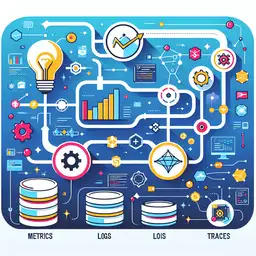
Tempo traces operate in two major capacities within this architecture: as an ingestion point for trace data and as a queryable backend for trace retrieval and visualization.[5] This dual functionality makes Tempo traces particularly valuable in the observability stack alongside metrics (via Prometheus) and logs (via Loki).
### Key Characteristics of Tempo Traces
Tempo traces possess several distinguishing characteristics that make them ideal for modern DevOps environments:
- **No Indexing Required**: Tempo traces are stored without indexes, dramatically reducing infrastructure costs and operational complexity.[1][3] - **Object Storage Optimization**: Tempo traces are stored in affordable cloud object storage services like AWS S3, Google Cloud Storage, or Azure Blob Storage, enabling long-term retention without breaking budgets.[1] - **Trace ID-Based Retrieval**: Instead of complex queries, Tempo traces are retrieved using trace IDs, which can be extracted from logs using Grafana Loki.[1] - **Massive Scale**: Tempo traces can handle millions of spans per second, making them suitable for enterprise-grade microservices architectures.[1]
## Practical Implementation of Tempo Traces
### Storage Configuration for Tempo Traces
For development and testing environments, Tempo traces can be stored locally:
storage: trace: backend: local local: path: /tmp/tempo/traces
For production environments, configure Tempo traces to use cloud object storage:
storage: trace: backend: s3 s3: bucket: my-tempo-traces-bucket endpoint: s3.amazonaws.com access_key: ${AWS_ACCESS_KEY_ID} secret_key: ${AWS_SECRET_ACCESS_KEY}
### Protocol Support for Tempo Traces
Tempo traces are compatible with multiple open-source tracing protocols, providing flexibility in your instrumentation strategy:[7]
- **Jaeger Protocol**: Native support for Jaeger-formatted trace data - **Zipkin Protocol**: Full compatibility with Zipkin trace format - **OpenTelemetry Protocol (OTLP)**: Seamless integration with OpenTelemetry instrumentation
This multi-protocol support means your Tempo traces can ingest data from diverse sources without requiring format conversion or custom adapters.
## Querying and Visualizing Tempo Traces
### The Trace ID Workflow
The most straightforward method for accessing Tempo traces involves using trace IDs:
1. Your application generates a trace ID at request ingestion 2. The trace ID is logged alongside relevant context 3. You search logs in Grafana Loki to find the trace ID 4. You use that trace ID to retrieve and visualize the full Tempo trace in Grafana
This workflow demonstrates why Tempo traces work best when integrated with Grafana Loki. The combination creates a powerful correlation mechanism between logs and traces.
### Grafana Integration with Tempo Traces
Tempo traces integrate seamlessly with Grafana, allowing you to visualize traces alongside metrics and logs in unified dashboards.[1][8] This integration enables SREs to correlate observability signals across all three pillars—metrics, logs, and traces—within a single platform.
## Cost Optimization with Tempo Traces
The financial advantages of Tempo traces make them particularly attractive for organizations managing large-scale distributed systems:
### Elimination of Indexing Overhead
Traditional tracing systems maintain indexes for every searchable field in trace data. Tempo traces eliminate this entirely, reducing both storage requirements and infrastructure costs by orders of magnitude.[1][3] This no-indexing approach doesn't sacrifice functionality—it simply shifts the query paradigm from full-text search to trace ID lookup.
### Efficient Storage Through Compaction
Tempo traces employ an automatic compaction process that merges smaller trace files into larger ones over time, optimizing storage efficiency and reducing the total number of objects stored in your cloud storage backend.[1] This background process runs transparently, requiring no manual intervention.
### Long-Term Retention at Scale
Because Tempo traces don't require expensive databases or indexes, storing trace data for extended periods becomes economically feasible. Organizations can retain Tempo traces for weeks or months rather than hours or days, enabling retrospective analysis and compliance requirements.
## Best Practices for Tempo Traces in DevOps
### Structured Instrumentation
Ensure your applications generate Tempo traces with meaningful context. When instrumenting with OpenTelemetry, include relevant attributes:
from opentelemetry import trace
tracer = trace.get_tracer(__name__)
with tracer.start_as_current_span("process_order") as span: span.set_attribute("order_id", order_id) span.set_attribute("customer_id", customer_id) # Your business logic here
### Correlation Between Observability Signals
Configure your logging to include trace IDs, enabling easy correlation between Tempo traces and log entries. This practice dramatically accelerates incident response by allowing engineers to jump between logs and traces.
### Sampling Strategy
While Tempo traces handle massive scale, implementing tail sampling strategies ensures you capture traces for error conditions and slow requests while maintaining manageable data volumes for normal operations.
## Conclusion
Tempo traces represent a modern approach to distributed tracing, specifically designed for the operational realities of large-scale microservices environments. By eliminating indexing complexity, leveraging affordable object storage, and integrating tightly with the Grafana ecosystem, Tempo traces provide DevOps engineers and SREs with a cost-effective path to comprehensive distributed tracing observability.
For organizations already using Prometheus for metrics and Loki for logs, adopting Tempo traces completes the observability picture with minimal additional operational burden. The no-indexing architecture, combined with straightforward trace ID-based retrieval, makes Tempo traces an excellent choice for teams seeking to scale their observability infrastructure without proportional cost increases.