Tempo Traces: A Practical Guide for DevOps Engineers and SREs
As distributed systems and microservices architectures become the norm, observability is no longer optional—it's essential. One of the most powerful tools in the observability stack is distributed tracing, and Tempo traces are at the heart of scalable, cost-effective…

Tempo Traces: A Practical Guide for DevOps Engineers and SREs
As distributed systems and microservices architectures become the norm, observability is no longer optional—it's essential. One of the most powerful tools in the observability stack is distributed tracing, and Tempo traces are at the heart of scalable, cost-effective tracing for modern DevOps and SRE teams.
In this guide, we’ll dive into what Tempo traces are, how they work, and how you can implement them in your environment. We’ll also walk through practical examples and code snippets to help you get started quickly.
What Are Tempo Traces?
Tempo traces refer to the trace data collected, stored, and visualized using Grafana Tempo—a distributed tracing backend designed for high-scale environments. Unlike traditional tracing systems that require expensive databases and complex indexing, Tempo stores traces in object storage (like AWS S3, GCS, or Azure Blob Storage) and retrieves them by trace ID, making it both cost-effective and highly scalable.
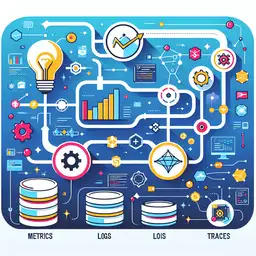
Tempo is part of the Grafana observability stack, alongside Prometheus (for metrics) and Loki (for logs). This integration allows you to correlate Tempo traces with metrics and logs in Grafana dashboards, giving you a unified view of your system’s health and performance.
Why Use Tempo Traces?
- Cost Efficiency: By storing traces in object storage and avoiding indexing, Tempo drastically reduces infrastructure costs.
- Massive Scale: Tempo is built to handle millions of spans per second, making it ideal for large-scale microservices environments.
- Seamless Integration: Tempo integrates natively with Grafana, allowing you to visualize and analyze Tempo traces alongside metrics and logs.
- Long-Term Retention: Object storage enables affordable long-term retention of trace data for compliance and historical analysis.
How Tempo Traces Work
The journey of a Tempo trace typically follows this path:
- An instrumented application generates trace data (spans) as requests flow through your services.
- A trace collector (like OpenTelemetry Collector) receives the spans and batches them.
- The collector sends the batched spans to Tempo, which stores them in object storage.
- When you need to debug or analyze a request, you use a trace ID (often found in logs) to retrieve the full trace from Tempo.
- The trace is visualized in Grafana, showing the flow of the request across services.
Setting Up Tempo Traces
To get started with Tempo traces, you’ll need:
- A Tempo backend (can be self-hosted or managed via Grafana Cloud)
- A trace collector (OpenTelemetry Collector is recommended)
- Instrumented applications (using OpenTelemetry SDKs)
- Grafana for visualization
Example: Instrumenting a Python Application
Here’s how to instrument a Python application to generate Tempo traces using OpenTelemetry:
from opentelemetry import trace
from opentelemetry.exporter.otlp.proto.grpc.trace_exporter import OTLPSpanExporter
from opentelemetry.sdk.trace import TracerProvider
from opentelemetry.sdk.trace.export import BatchSpanProcessor

# Set up the tracer
trace.set_tracer_provider(TracerProvider())
tracer = trace.get_tracer(__name__)

# Configure the OTLP exporter to send spans to Tempo
exporter = OTLPSpanExporter(endpoint="http://tempo:4317", insecure=True)
span_processor = BatchSpanProcessor(exporter)
trace.get_tracer_provider().add_span_processor(span_processor)

# Example: Create a span
with tracer.start_as_current_span("process_order"):
    # Your business logic here
    print("Processing order...")
This code sets up OpenTelemetry to export spans to Tempo via the OTLP protocol. Replace http://tempo:4317 with your Tempo collector’s address.
Configuring the OpenTelemetry Collector
The OpenTelemetry Collector acts as a bridge between your applications and Tempo. Here’s a sample configuration (otel-collector-config.yaml):
receivers:
  otlp:
    protocols:
      grpc:
      http:

exporters:
  otlp/tempo:
    endpoint: "tempo:4317"
    tls:
      insecure: true

service:
  pipelines:
    traces:
      receivers: [otlp]
      exporters: [otlp/tempo]
This configuration tells the collector to receive OTLP traces and export them to Tempo.
Visualizing Tempo Traces in Grafana
Once traces are flowing into Tempo, you can visualize them in Grafana:
- Add Tempo as a data source in Grafana.
- Use the “Explore” tab to search for traces by ID.
- Correlate traces with metrics and logs for deeper insights.
For example, if you see a slow request in your metrics, you can use the trace ID from your logs to pull up the corresponding Tempo trace and see exactly where the bottleneck is.
Best Practices for Tempo Traces
- Use Structured Logging: Include trace IDs in your logs so you can easily find and retrieve Tempo traces.
- Sample Wisely: In high-volume environments, consider sampling traces to reduce storage costs.
- Monitor Trace Health: Set up alerts for missing or delayed traces to ensure your observability pipeline is healthy.
- Correlate with Metrics and Logs: Use Grafana to correlate Tempo traces with Prometheus metrics and Loki logs for a complete observability picture.
Real-World Example: Debugging a Slow Microservice
Imagine you have a microservice that’s suddenly slow. Here’s how Tempo traces can help:
- Check your metrics dashboard for the slow service.
- Look at the logs for a recent request and find the trace ID.
- Use the trace ID in Grafana to pull up the Tempo trace.
- Inspect the spans to see which service or method is causing the delay.
- Fix the issue and verify with new traces.
This process, powered by Tempo traces, can reduce debugging time from hours to minutes.
Conclusion
Tempo traces are a game-changer for DevOps engineers and SREs managing distributed systems. By leveraging object storage and seamless Grafana integration, Tempo makes it easy to collect, store, and analyze trace data at scale. With the practical examples and code snippets in this guide, you’re ready to start using Tempo traces to improve observability, reduce debugging time, and ensure the reliability of your systems.
Start implementing Tempo traces today and take your observability to the next level.